Home Oratories

whole duty

Necessary for Families

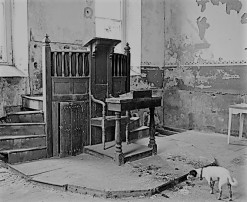
This post is partly a response to a few requests I’ve had about my attempt at making a Home Oratory with my family: Queen Anna’s Prochapel. Posts at Anglican Rose are coming to a trickle with Post-Brockton being one of the last. I’ll perhaps resume regular writing in 2015, but I’ve chosen to postpone further commentary until developments in pan-Anglicanism becomes a bit more settled. Meanwhile, study resources will be added here (and elsewhere) that expand upon the idea of building “Little Giddings” for loyal Anglican households.
Continue reading

Post-Brockton

Lady of the Snows

Lady of the Snows

This post is the last of a four-part series on the future of the Continuing movement and it potential impact on North American Anglicanism. The earlier commentary can be read at “Continuing Politics” under AR’s Scriptorium

Otherwise known as the World Consultation, the Anglican futures conference held in Brockton, MA in 2011 may have been the most important event to hit the Continuing Anglican movement since the 1998 REC-APA unity talks. While the precise consequence of the Brockton conference is elusive, two possible outcomes that impact North American Anglicanism seem immanent. ”Post-Brockton” not only can unite the majority of the continuum, but it also risks cutting ties with ACNA (more specifically the REC-FiFNA coalition inside ACNA). Some of these contours have already been examined in the earlier yet equally lengthy article: the Bartonville Factor.
Continue reading

Sabbath Days

Christ is Risen

Sabbaths and Holy Days are interchangeable concepts. Puritans understood the Christian Sabbath largely as a continuation of the OT Mosaic code translated to Sunday observance.  Anglicans took a more nuanced view, retaining the general idea of “rest” but putting aside the ceremonial strictness of the OT. Such a treatment of Sabbath-keeping gave Anglicans leeway to establish other holy days aside from fixed Sundays, revealing a pastoral sensitivity toward Sabbath-keeping as well keeping the proper division of ecclesiastical vs. divine law. Continue reading

Shorter Affirmation

Despite appearances to the contrary, Anglican Rose acknowledges the good of the St. Louis Affirmation. The Affirmation was a needed antidote to the 1970′s civil rights mania infecting the church, correcting the tide of feminism by appeal to Tradition.  However, when the Affirmation is taken in a ‘confessional’ sense, it narrows churchmanship on strict anglo-catholic lines (1). Against this insertion of “old catholic” doctrine, the main of continuing churches have kept a broad ethos. Yet, the Affirmation is hardly a solution to illicit Anglican comprehension since the Accord generates its own set of disagreements. A shorter version of the Affirmation better represents the broad orthodoxy (historically characteristic) of the continuing movement.  Continue reading

Donlon’s Bubbles

Bubble Map

In the 2012  Forward in Christ October issue (vol. 5, #2, p. 18), Fr. Kevin Donlon mapped various relationships and interconnections among both Canterbury-aligned and extra mural Anglican churches, lamenting their growing fragmentation and fission.  Donlon urges reversing ecclesiastic disintegration by restoring the fullness of the catholic faith: magnified by historical liturgy, patristic interpretation, and regular catechism. Donlon has a good amount of that catholic teaching in his module series called ‘Generations of Faith’. According to Donlon, ecclesiastical fragmentation is the end-product of theological confusion, yet the crisis provoked by gay bishops compels GAFCON to widen its evangelical base to include traditionalists. Catholic inclusion may very well alter evangelical opinion respecting other ‘gender issues’ lurking behind the Jerusalem Declaration . Continue reading

ACC Makeover

The other day I ran across the updated website of the ACC. I was very surprised, especially by FAQ links that staked out the ACC’s position on the English Reformation and therefore Anglican formularies. At first glance, it appeared to defend the Elizabethan Settlement, even calling the ACC a “reformed Catholic church”. Nonetheless, I kept myself fastened to the ground and asked if the new webpages represented a retraction of the ACC’s Athens Statement; in other words, was ACC finally approving the the basic theology of the Settlement period? What follows is a comparison of the content of the new website to the older Athens Statement, and maybe from there a sober evaluation can be had.  Readers will find the ACC’s identity hinges upon a theory of doctrinal development between the Settlement and Tractarianism, ultimately justifying the ACC’s current theological position.  Continue reading

Common Prayer Day

Common Prayer  Initiative 2012

Unfortunately, St. Bartholomew’s Day has come and gone. With it’s passing so has the 1662 BCP’s 350th anniversary.  However, the occasional use of the 1662 BCP for recalling the historical roots of local/ national liturgies, like the American 1789 or Scottish 1764, has hopefully just begun.  At a time when Anglicans suffer ecclesiastical diaspora and devolution, reaffirming the normalcy of historical standards, especially the 1662 sealed book, is crucial. The following post at River Thames attempts to address some of the unnecessary confusion between 1549 and 1662 prayer book ‘streams’ , basically chalking such up as a difference between a local “Use” vs. a fully endowed “Rite”. Of course, Papist clergy turn the relation upside down, placing the Roman Rite on top. The article at River Thames may be read here.